

An Unfortunate History of Bird Decline
by Ava Landgraf
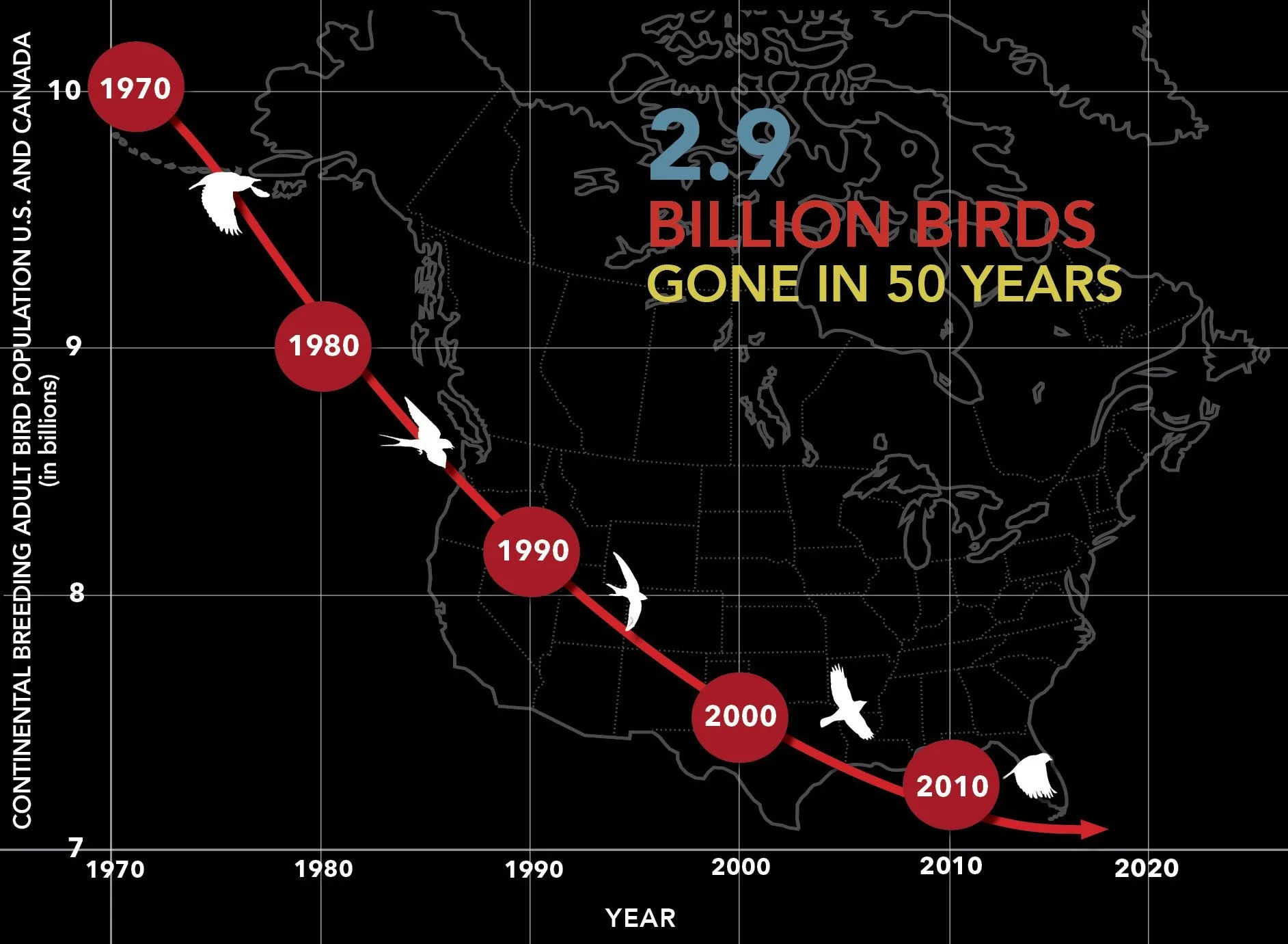
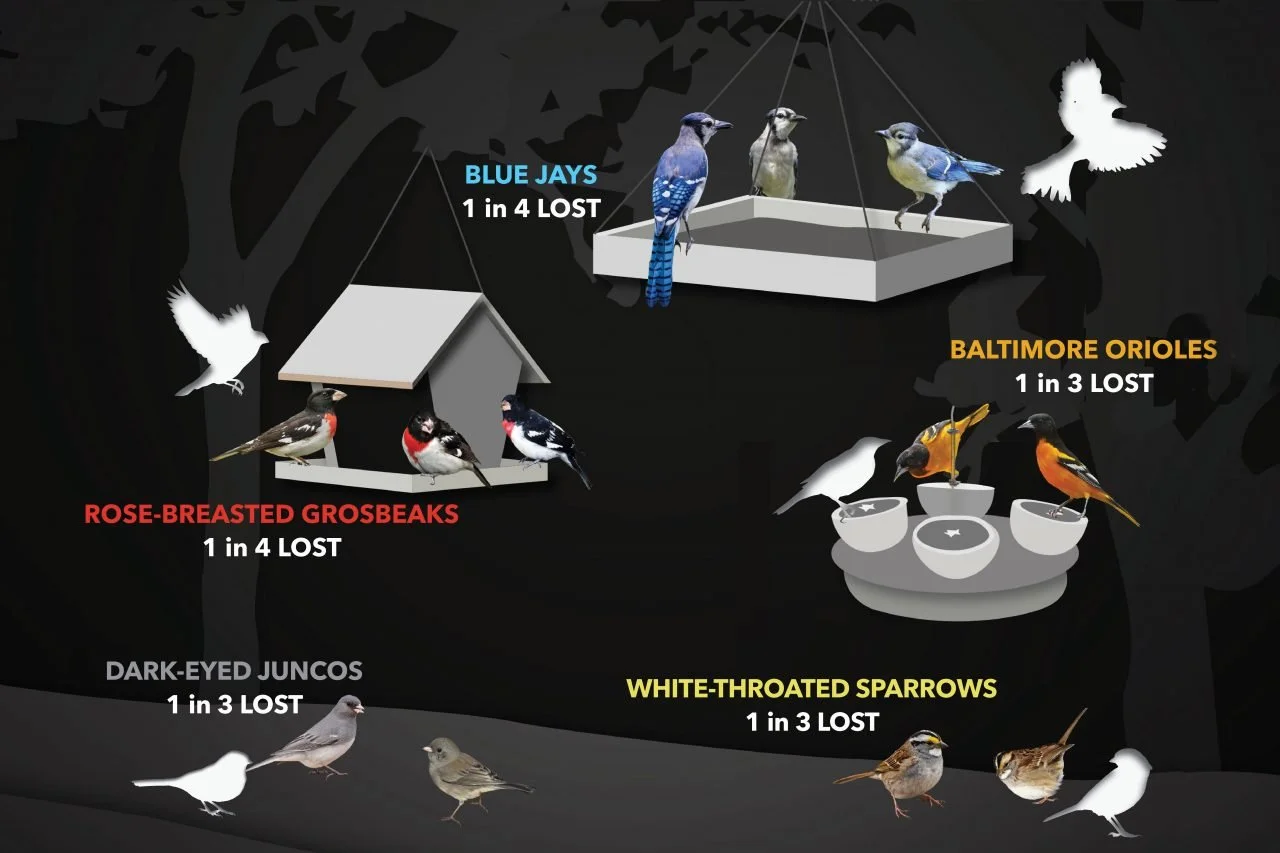
A 2019 report published in the journal Science states that wild bird populations in North America have declined by almost 30% percent since 1970. Although this report is devastating, it shares some valuable insights. Unlike most other birds, waterfowl and birds of prey have actually increased in numbers. This shows that conservation programs can work and encourages Detroit Bird Alliance to continue our work to support birds and habitat.
Apart from habitat loss, the number one reason for bird decline directly caused by humans is cats. Even with a bell or other anti-hunting devices, cats are just too good at hunting. Cats are especially problematic in the spring when fledglings are on the ground. Even if cats are well fed, most cats still love to hunt and play. All it takes is a small puncture wound from a tooth or claw to cause a fatal infection. When considering a pet cat, be sure to adopt, not buy from a breeder, keep the cat inside (unless on a leash), and spay and neuter.
Another reason for bird decline directly caused by humans is bird/building collisions. As many as 1 billion birds are estimated to die from building collisions in the United States every year. Birds do not see glass and try to fly through windows. They are also disoriented by the artificial light installed on many buildings. Bird/building collisions with houses are also a risk. Birds are lured toward windows by adjacent bird feeders, bird baths, fruit-bearing trees, and other attractions.
Most migrating birds fly at night, using celestial cues such as the moon and stars for navigation. As birds fly over urban areas like Detroit, they are naturally drawn to the artificial lights of tall buildings, communications towers, and other floodlit structures. Even if collisions are avoided, studies show bright lights confuse birds and cause them to detour drastically from their migratory routes, flying in circles and wasting crucial energy. The exhaustion can be fatal or leave them vulnerable to other urban threats and predators.
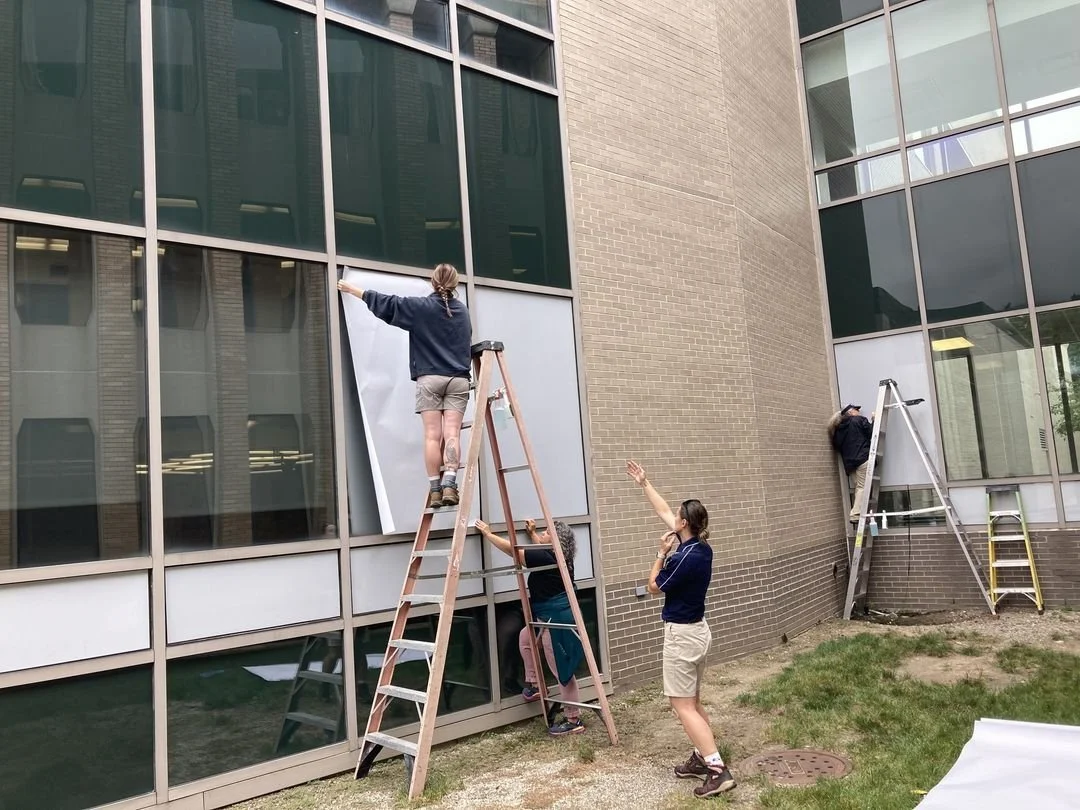
Detroit Bird Alliance worked with Wayne State University in 2023 to retrofit library windows with bird-safe decals to decrease the number of bird collisions.
Speak with local business owners and your representatives about creating safe buildings for birds. Ask your neighbors if they would consider keeping their cat indoors. Check the windows of your home and your outside lights. If we work together, we can have a positive impact on bird populations and the environment we share.