Black Tern Monitoring
One of the largest Black Tern breeding colonies in Michigan resides at St. Clair Flats.
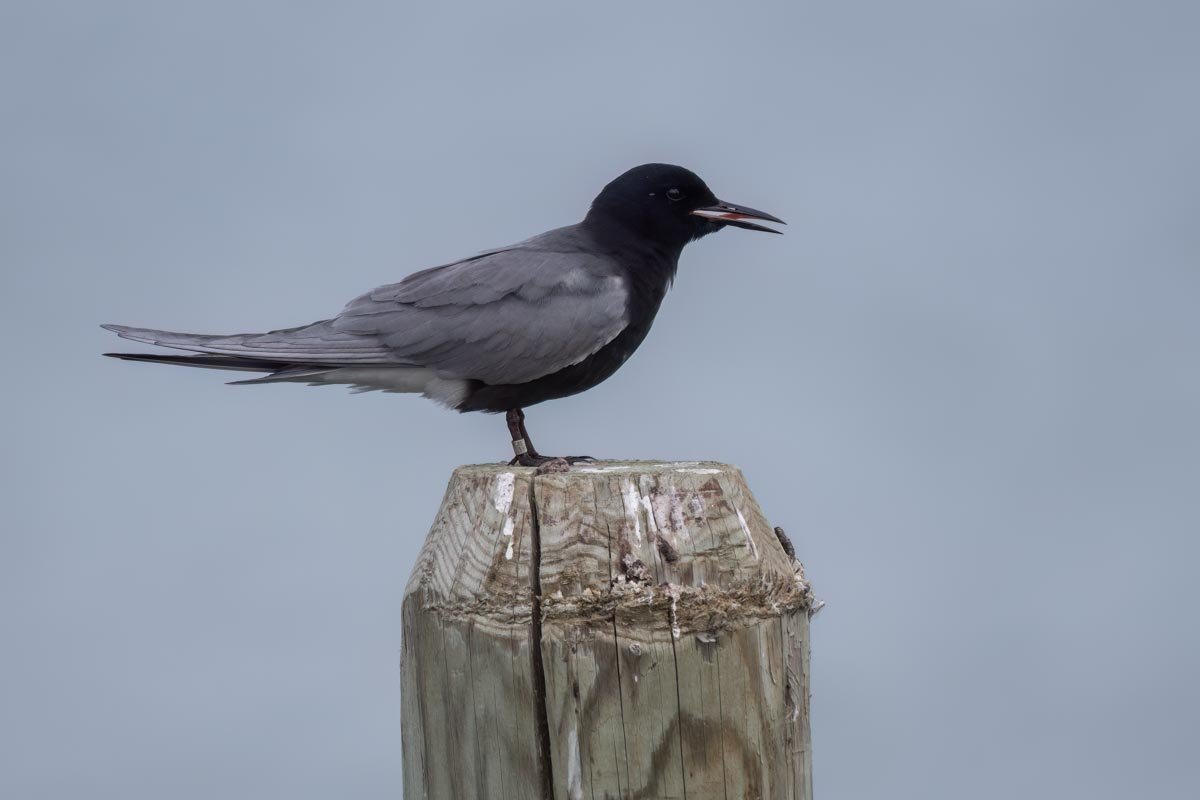
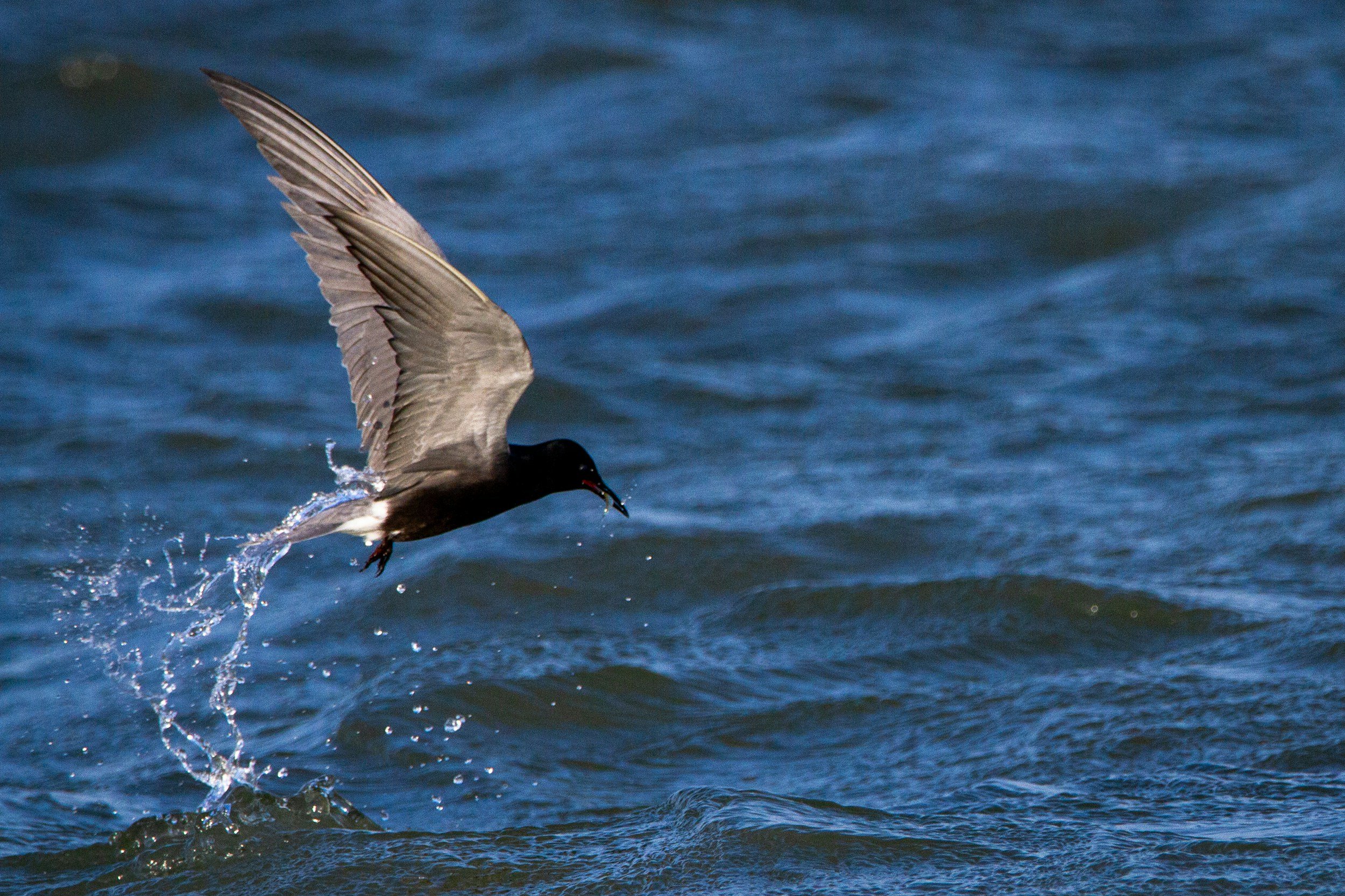
Black Terns spend half their life flying over the ocean off the coast of Central and South America and half their life breeding in U.S. and Canadian marshes. The birds create their nests on mats of vegetation floating in the water. Despite their charm and unique lifestyle, the birds are not well understood, and their populations are decreasing throughout the Great Lakes region. Due to the urgent need for action, the Black Tern is receiving increasing attention from federal and state agencies.
Black Terns are currently listed as a common species in general, but their numbers are decreasing at a drastic rate. They are listed as a Species of Special Concern in ON, MI, and MN. And they are listed as State Endangered in WI, IL, IN, OH, PA, and NY.
St. Clair Flats Colony
Detroit Bird Alliance began monitoring the Black Tern colony at St Clair Flats (SCF) in 2013, with population estimates of around 600 Black Terns. Now, the number of Black Terns at SCF hovers around 100-200 birds. The SCF Black Tern colony was one of the largest in Michigan, but now that title is arguable. Studies have shown that many smaller breeding colonies are disappearing, making larger colonies, such as St. Clair Flats, especially valuable. If population numbers continue to drop, it will become increasingly difficult to restore the populations to sustainable numbers.
St. Clair Flats holds over 25,000 acres of freshwater and marsh vegetation. This makes the area an extremely valuable habitat for breeding marsh birds including Forster’s Terns, Gallinules, Grebes, Coots, and Bitterns, as well as the Black Terns. However, the area still poses many conservation concerns, such as:
Invasive Plant Species
Disturbance from Boat Traffic
Trash and Plastics in the Water
Decreased Insect and Fish Food Sources
High Water Levels
Detroit Bird Alliance’s Current Work
To determine the benefit of the artificial nesting platforms, they are installed in view of nest cameras. The cameras are either on a motion detection setting or a two-minute time-lapse setting. These settings allow us to capture whether the eggs hatch and whether the chicks successfully fledge. We have seen that the Black Terns are interested in using the artificial nesting platforms, but we need to be sure that the platforms increase the chances of the eggs successfully hatching and the chicks successfully fledging.
In addition to our conservation fieldwork, we are also pushing to increase knowledge of Black Terns around Southeast Michigan. In particular, we are hoping to increase boaters’ awareness of the nesting birds and make a difference in the boat speeds used in the areas where birds nest.
Detroit Bird Alliance Work Since 2013
-
Detroit Bird Alliance has partnered with the Michigan Department of Natural Resources and Audubon Great Lakes to monitor the SCF colony since 2013. During the beginning years, we prioritized capturing and banding adult Black Terns. To capture the adults, we would set up walk-in or drop-in traps on top of the tern nests, and we would switch out the real eggs with dummy eggs to keep the real eggs safe. When an adult Black Tern returned to their nest to continue incubating the eggs, they would get caught in the trap. We would take the bird from the trap, band it, record some measurements, and release the bird as quickly as possible. With this banding data, we planned to create an Integrated Population Model to better understand Black Tern population dynamics regarding the number of chicks successfully fledging and the number of adults returning year-to-year.
-
In 2017 we began to test the use of geolocators and nanotags (tiny tracking devices) to learn more about Black Tern migration patterns. Then, in 2019 we began a project in partnership with Audubon Great Lakes using nanotags specifically on fledglings to determine fledging success and better understand first year migration routes. During 2019 we also started to test out the use of platforms and nest cameras.
-
Throughout 2019 and 2020, we saw a significant decrease in Black Tern numbers and nesting success at SCF while the water levels were the highest seen in decades. Our research showed that high water levels, frequent storms, limited vegetation mats, predators, and boat traffic are all impacting the Black Terns’ ability to raise chicks.
-
In 2021, we saw a slight increase in the number of adult Black Terns and a significant increase in nesting success which correlates with the large drop in water level. We continued to partner with Audubon Great Lakes to apply nanotags to juvenile Black Terns to learn about their fledging process and first migration south. In addition, we continued to use nest cameras to better understand the chick development process and what factors were contributing to nest failure.
-
In 2022, we continued to experience lower water levels at SCF and saw many nests successfully hatching and fledging chicks. We also had great success with monitoring Black Tern nests using nest cameras. These cameras were set up to capture a photo every two minutes, allowing us to track the nesting process and chick growth without any disturbance to the nest. At one nest, we placed an artificial nesting platform nearby to see if any terns would use it, and the cameras allowed us to capture Black Tern chicks using the platform after their original nest fell apart.
-
In 2023, all ten years of the Black Tern monitoring data at SCF came together for the Integrated Population Model. Unfortunately, this model showed that in order to reverse the population decline of Black Terns we cannot only address the conservation issues during the breeding season, we must also address the migratory and non-breeding season. However, it’s important to understand that conservation work during the breeding season is better than no conservation practices at all. Therefore we are continuing our efforts to support the birds during the breeding season and thinking about other ways to support them during non-breeding times.
By 2023, our research focus shifted from banding to learn more about Black Tern population dynamics to using platforms and nest cameras to learn more about Black Tern nesting habits and how to increase nesting success. In 2023, we installed six different types of platforms, each set up so that a nest camera would capture any platform usage. Unfortunately, many of the nest cameras malfunctioned and did not record anything.
However, both of the canvas and styrofoam platforms, designed by David Fuller, were recorded on camera with interesting results. One platform was caught on camera with a Forster’s Tern pair nesting on top of it. The other platform was caught on camera with, first, a pair of Forster’s Terns showing interest in the platform, then a Black Tern pair started nesting and laid an egg, and then the same or a new Forster’s Tern pair seemed to fight with the Black Terns for a bit before scaring them away and nesting over the Black Tern nest. We are very excited to continue research to see if artificial nesting platforms can be a method to increase Black Tern nesting success.
Watch Our Webinars
Black Tern Conservation at St. Clair Flats
Terns in Trouble: How Lake Level Rise and Storms Impact Black Tern Nesting Survival
Learn More & Get Involved
Read our article Hopeful Re-Tern: Black Tern Monitoring in 2021
If you are interested in supporting Detroit Bird Alliance’s Black Tern monitoring, please contact our Research Coordinator, Ava Landgraf, at alandgraf@detroitaudubon.org.
Latest in News & Stories